
|
|
||
|
|
|
|
|
The journey along the Silk Road was a challenging one, requiring courage and vision. Travelers from Asia, Europe, Northern Africa, and the Middle East often met to transact business and found they parted with new friends, new ideas, and new knowledge in addition to the exotic goods they had come for. In that spirit of tolerance and discovery, we seek to celebrate The Silk Road for Witches' Ball 2004.
Within our halls officers of the Byzantine army mingle with mystical Chinese weavers. Brightly clad Indian princesses whisper to laughing Buddhist monks. The musical cymbals of belly dancers punctuate the air as Syrian jugglers dazzle the eyes of masked Venetian merchants and Viking sailors. Himalayan yogis wander peacefully among fierce Hun warriors. Wise astrologers consult the heavens and nomadic fortunetellers study the palms of veiled Persian ladies. Chinese dragons cavort with mischievous Djinn in the silver moonlight...
Silk - An Ancient Chinese Secret Chinese legend attributes the discovery of silk to the goddess Lei Tsu (sometimes called Hsi Ling), wife of the mythical Yellow Emperor. When a cocoon from a mulberry tree accidentally dropped into the Empress's boiling hot tea, she unraveled a delicate silken strand. She had discovered the raw material that would later be spun into thread and woven into the luxurious textile known as silk. The source of this silken substance was kept a carefully guarded secret from all foreigners ensuring that China had a complete monopoly on this highly valued material for hundreds of generations. Silk became such an important commodity that every Chinese farm included a silk house and mulberry orchard (mulberry leaves being the only food the silkworms would eat). While male farmers grew food crops, women tended the mulberry groves - feeding the leaves to the silkworms and spinning silken thread late into the night. Silk was a form of currency and Chinese citizens often paid their taxes with bolts of "woven wind." Silk was considered more precious than gold! It sounds like China's entire economy depended on the nimble fingers of its female population. The demand for silk in western cultures fueled the evolution of the Silk Road trade routes. But China had many other treasures to send westward. Chinese porcelain and gunpowder, while not as easily portable, were also highly prized. Eventually, the secret of silk's origins escaped China's borders. Some say silkworms were smuggled out of China hidden inside the walking stick of a visiting monk. Other sources claim that a Chinese princess concealed silkworms in her headdress as she left her homeland to be married to a foreign prince. Either way, the ancient secret was eventually discovered by other cultures and silk began to be produced by western civilizations. Silk Road Routes
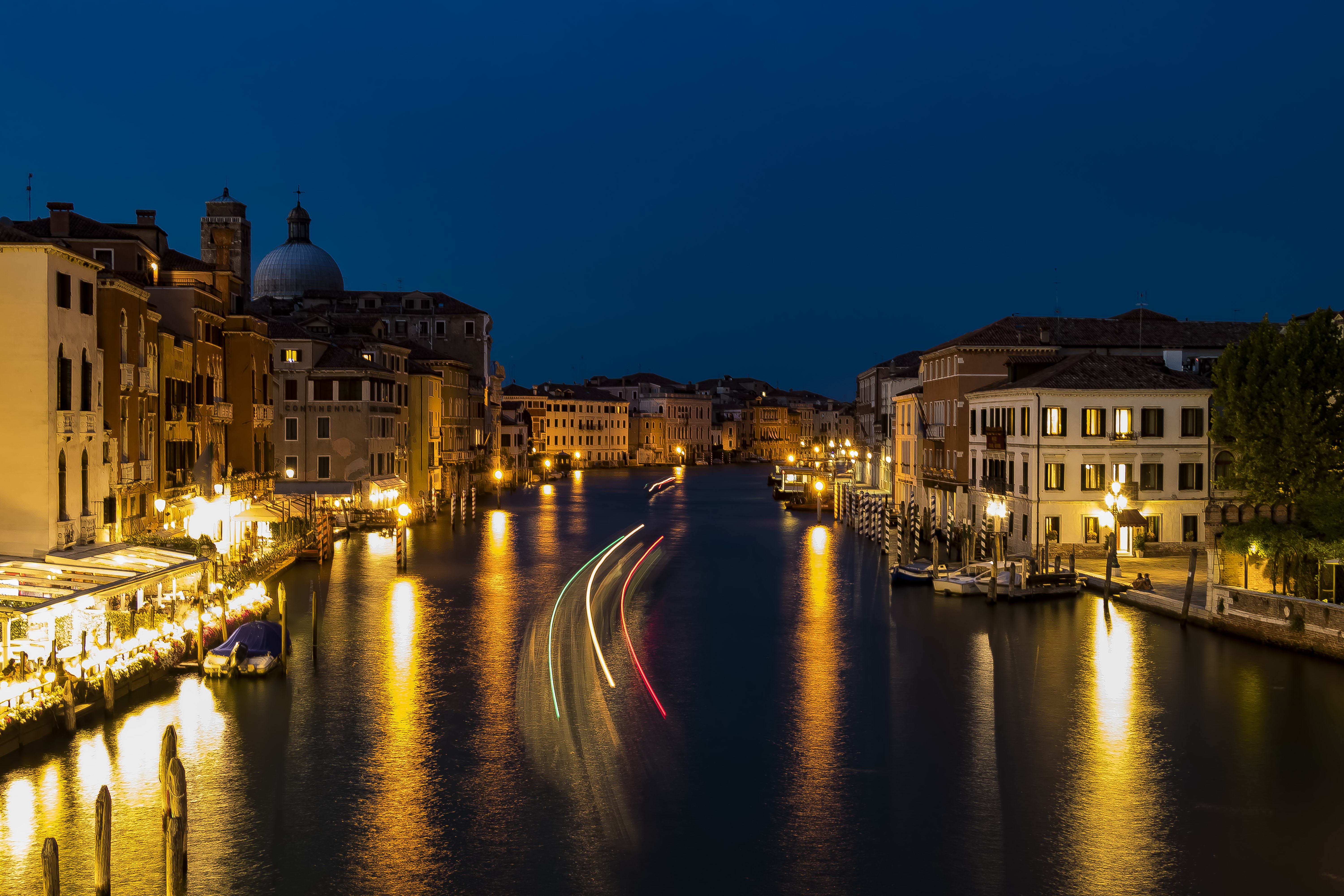
Venice - Queen of the Adriatic Situated in a marshy lagoon at the head of the Adriatic Sea, the city of Venice rose from the turmoil of violent northern invasions during the 6th and 7th centuries to become a center of trade between the east and the west. Refugees hid from the invaders on a series of uninhabited islands. The city, laced with sandy canals, was later built on those islands and connected by numerous bridges. The various islands centralized their government under a ruling Doge during the 9th century and the city of Venice was established.
Ideally located to profit from the sea-born trade traveling to and from the east, Venice's sheltered harbor hosted merchant ships from ports all over the Mediterranean Sea and Europe. The market stalls of Venice were a treasure trove of Chinese porcelain, Syrian glassware, and inlaid Persian bronze among many other wonders. The city prospered and became home to many rich merchants. The famous Venice Carnival dates back to the 14th and 15th centuries - near the very end of the Silk Road history. This wildly colorful celebration began on St. Stefano's Day (December 26th) and continued until the day before Ash Wednesday (Fat Tuesday). During the months of Carnival, the canals and public squares (the campi) of Venice were transformed into a chaotic circus of exotic animals, jugglers, acrobats, puppeteers, and other live performances. Theaters, cafes, taverns, brothels, restaurants, and gambling houses were crowded with revelers and many wealthy citizens hosted elaborate masquerade balls. Nobility and commoners alike wore masks at all times during the Carnival season to conceal their identities. Ostensibly, the masks served to equalize everyone and alleviate class tensions. However, masked revelry also assured anonymity and avoided scandal. Marco Polo and Kublai Khan
"In Xanadu did Kubla Khan
A stately pleasure-dome decree: Where Alph, the sacred river, ran Through caverns measureless to man Down to a sunless sea." - From Kubla Khan By Samuel Taylor Coleridge Born among the wealth and privilege of Venice in 1254, Marco Polo was destined to become one of the most famous merchants to travel the Silk Road. At the age of 17, Marco set out with his father and uncle for the court of Kublai Khan. Marco would return to Venice over 24 years later with many fantastical tales to tell. Kublai Khan, grandson of Genghis Khan, was the first foreign ruler to gain control over all of China. Although a ruthless conqueror who subdued the Chinese aristocracy through brutal warfare, Kublai believed in studying and valuing all cultures. His rule brought a period of relative peace and prosperity to the Silk Road.
Back in Venice, Marco Polo was imprisoned during a war with Genoa. During that time he told a fellow prisoner and writer named Rustichello of Pisa stories of his adventures in exotic lands. Rustichello published those stories as a book originally titled Il Millione, and later called The Travels of Marco Polo. Although the book was extremely popular and translated into many languages, it was regarded by many Europeans as a work of pure fiction. Today, many western people believe the names of Marco Polo and Kublai Khan are synonymous with the Silk Road. In actual fact, their alliance occurred toward the end of the Silk Road's dominance as the primary transportation corridor between east and west. In later years, sea travel would virtually replace the dangerous land passage. The Beginning of the End
Today, much of Silk Road culture and history has been lost beneath the shifting sands of time, destroyed by warfare, or veiled behind changing political conditions. And yet, the exotic perfume of Silk Road adventure still lingers in the collective imagination. Come join us to celebrate and remember centuries of commerce, communication and cooperation along the Silk Road. |
||
| © 2004 Full Circle Events |
11825